In Portugal, indignation is rampant.
With the new policy of €0.10 charge per bottle or can, protests have arisen. After all, according to the protesters, each consumer is indirectly recruited as an unpaid worker for the large stores.
But it’s not just the financial issue. Since the machines only recognize full bottles and cans, you can’t crush them. That’s true. The gigantic problem for all consumers who have always crushed bottles and cans. A nation within a nation: the nation of bottle and can crushers.
And the humiliation of carrying garbage and “wasting time in humiliating queues”? Practically begging for money that originally belonged to the consumer (usually those who defend this also the ones saying “don’t I pay your salary?” to police authorities or public servants).
And the incredible trick of reimbursing with a receipt that can only be used for a new purchase in the same store? It’s as if someone would go to a supermarket just to return bottles, as if it weren’t a simple process to buy something, including bottles or cans, and then, when returning to the store to buy other items, take the bottles, receive the receipt, do the shopping, and deduct the value from the receipt.
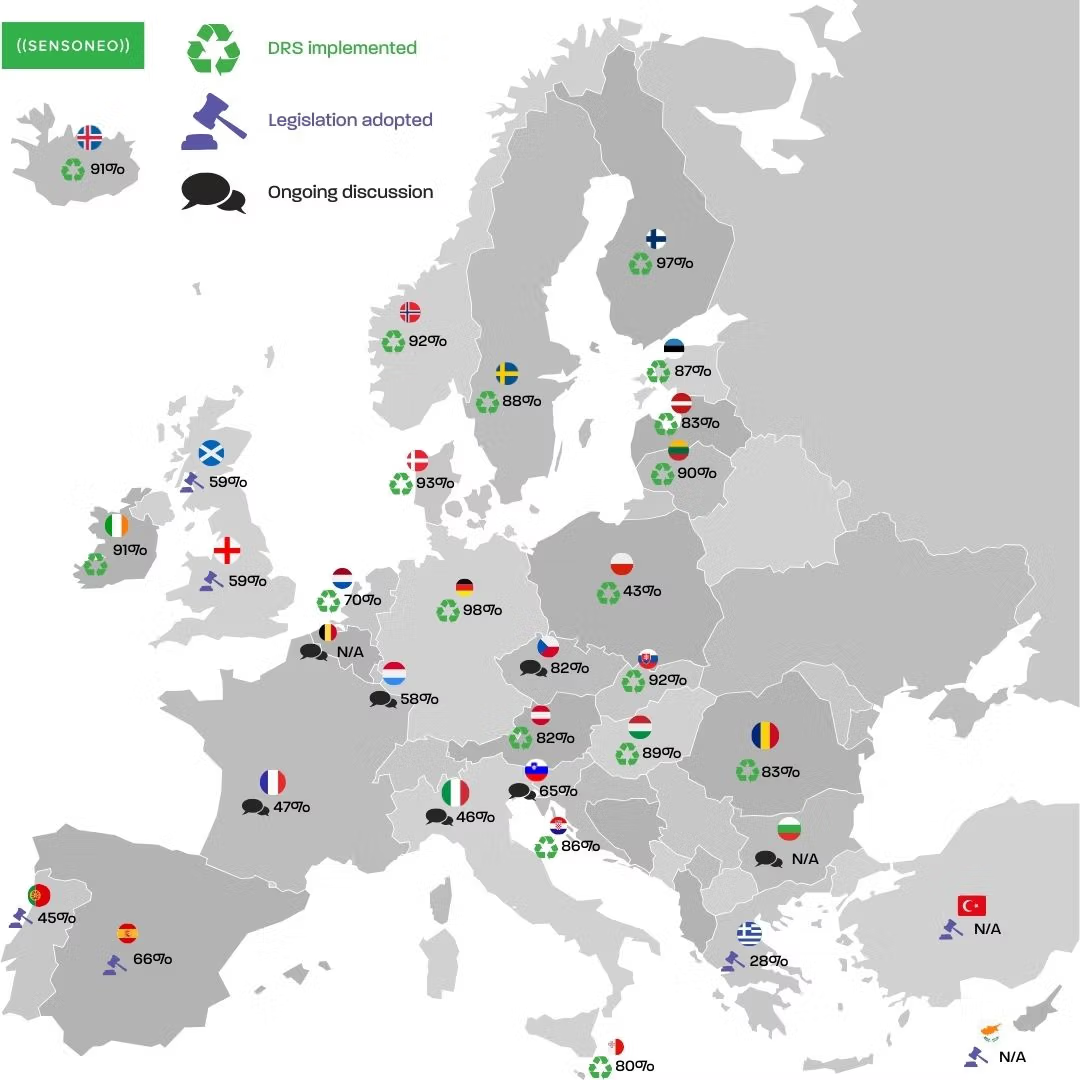
In Germany, the return rate is 98%, according to data from February 2026. Are people in Portugal less likely to return a bottle? Is it so much harder to do that in Portugal than in Germany?
Does separating domestic waste also mean working for a city hall? Taking the trash out, even before recycling was a thing, was it working for the city hall? Or does it not qualify because it doesn’t require standing in “humiliating queues”?
I still remember going to Inô (an old portuguese supermarket chain) with my parents to return glass bottles using the exact same logic. We’re talking about the 80s, meaning it’s not even something innovative; it’s just going back to something that was done naturally before.
In 2026, is this something so complicated that it leads to a boycott?

But it’s not just bottles and cans, nor is it just Portugal.
In Brazil, several cities have adopted charging for plastic bags. The result, in this case, is more debatable. After all, people started using bags for life, or ecobags, with a consequence that has been debated: the use of plastic bags for garbage, when there was a logical reuse option. It’s true that the bags that are sold are, in principle, recycled or reusable, which reduces the amount of plastic waste.
In Brazil, given the lack of separate waste collection, the use of cardboard boxes or paper bags to hold paper, or at least to carry glass, metal, and plastic waste to collection containers, is not considered. This would reduce the need for plastic bags, using them for organic waste. In other words, a reduction in plastic use. Logical for Portugal, but not yet applicable in Brazil.
Incidentally, when the Lidl supermarket chain arrived in Portugal, people knew there were no plastic bags; everyone had to use ecobags or any cardboxes they could find. I don’t recall any outcry about reusable bags. Those who didn’t want to carry boxes around didn’t go to Lidl.
These are two cases where we see the principle of “everyone does their part” applying. Companies do their part, and so do consumers. It’s not about being an employee or receiving money that was always yours. It’s about not being charged for fulfilling your role in caring for the environment. You paid, you were reimbursed.
The financial incentive is relatively simple…
Seatbelts started being used when fines were implemented for those who didn’t wear them. It wasn’t due to individual conscience.
What would make sense would be to contest the extra payment on air travel. After all, the proposal is to offset the carbon footprint. The consumer pays, but then the results are presented as a merit of the company.
Between marketing maneuvers, ESG culture, and the role of each individual in society, it would be important to have an environmental awareness of preserving what we can take care of with small actions.